
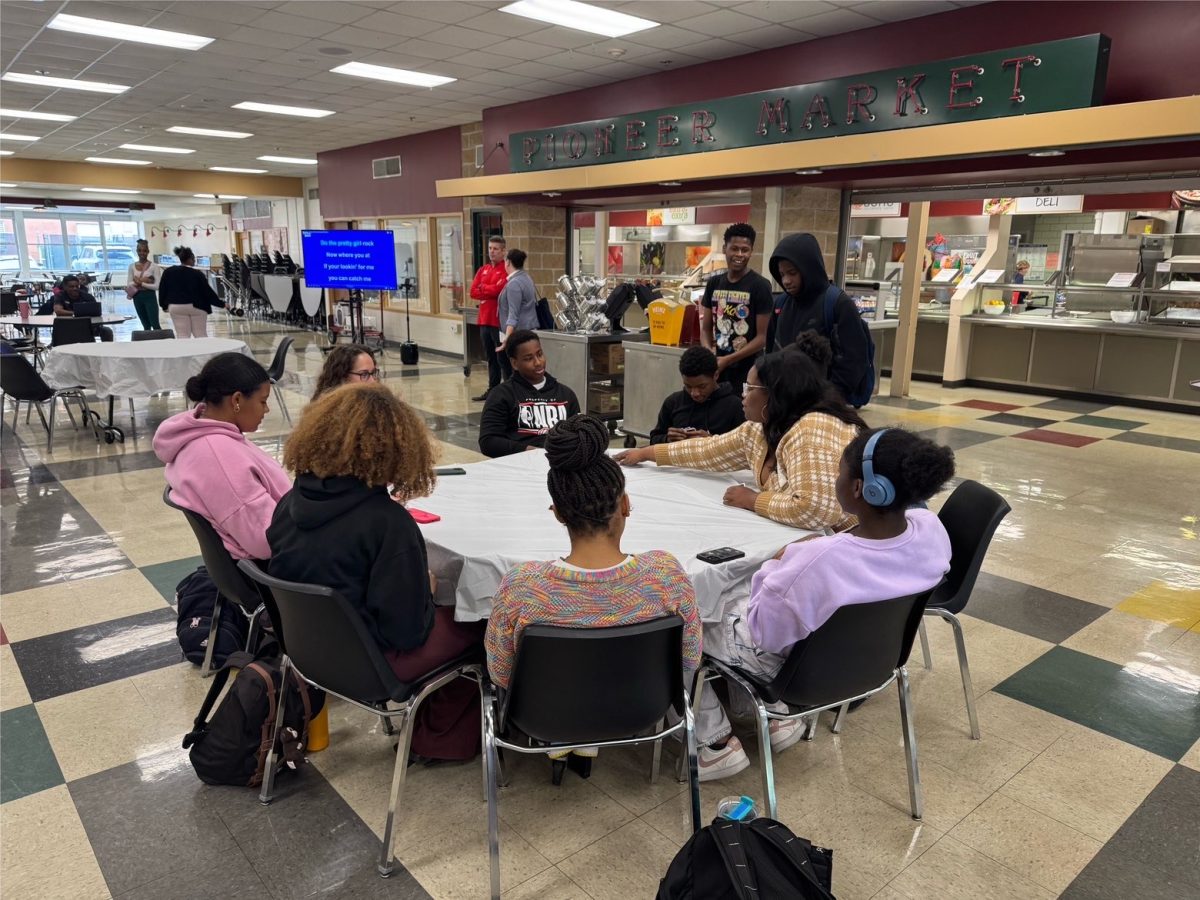
Amid the bustle of day-to-day student life and responsibilities, some are also learning culture and life skills every Thursday morning. The Black Achievement Culture Club (BACC) has been at KHS for generations and is sponsored by three staff members: Dr. Shiree Yeggins, assistant principal of Pioneer Pathways, Paula Martin, administrative assistant for Pioneer Pathways and Corynne Person, FACS teacher. The BACC has been a part of the KSD for the past 30 years and was started by Ramona Miller, science teacher and later assistant principal, and was designed to be an inclusive space for African American students. BACC member Ayesha Thornton, junior, said it’s a group that advocates for opportunities and understanding for minorities.
“BACC [embraces] people from different backgrounds and [teaches] people to not feel bad about who they are,” Thornton said. “[BACC] stands for empowering yourself, uplifting yourself [and] making sure that you have control over your own life.”
Person also said the club promotes African American culture and celebrates their achievements in both academics and extracurricular activities. Today, the KHS student body has less than 12% of African American students, declining from previous years. Therefore BACC, Person said, began as a way to help kids develop their voice and foster conversation on their heritage.
“[KSD] wanted to have a space for [African American students] to feel comfortable, be able to ask questions and give insight about Kirkwood,” Person said. “That’s the ultimate goal: [connecting] the students more to the campus.”
Another legacy of Miller is the Ramona Miller Academic Achievement Award. Thornton said the award, which is similar to other awards such as the Gold K, t, is presented in February to African American students who maintain a 3.0 GPA or higher during the first semester of the school year, as well as celebrates their academic success. This year’s ceremony will be held Feb. 13 in the Keating Theater and will feature other student recognitions, such as performances from the band and orchestra.
“[The ceremony] honors students that have achieved honor roll, and also highlights other students involved in the arts,” Person said. “We always have people in the band or orchestra that come play. I know [the ceremony] was a big deal for us to help them to be recognized and see their talents when they’re performing.”
BACC meets once a month during homeroom and sends emails to students listing possible activities and fundraisers they can attend. These opportunities also include workshops with guest speakers, such as nurses, counselors and other professionals. Thornton said attending them helps students know about positions and careers available outside of KHS. Ashley Clincy, sophomore and BACC member, said she tries to attend all the workshops she can.
“The workshops play a big part in my high school career,” Clincy said. “Not a lot of the school provides workshops like these, where you get to meet people and give you these opportunities to make sure you have resources available.”
Aniya Kincade, junior and member of BACC, said the club is more than a place to speak about racism they experience in the community. She also said BACC encourages students to think about their next steps after KHS and aims to help members flourish.
“They want us to explore what’s out there in the world, what your path is in life.” Kincade said. “They want you to be successful, instead of being in one place without a job or just a high school degree.”
Thornton said the club helps students develop their own voices and identity, allowing them to pursue their goals unhindered. Clincy said the BACC also teaches students practical advice such as punctuality and communication, which help students develop situational awareness.
“A lesson [from BACC is] making sure you’re punctual, showing up on time and [that] you hold yourself accountable,” Clincy said. “[It makes] sure you’re aware that there [are] other people [around you, and how your actions] affect the people around you.”
BACC aids KHS through the events they support, such as fundraisers, donation drives and organizing the Friendship Dance. The club is in charge of setting up the decorations and logistics of the dance, as well as promoting the event. Person said BACC holds the Carl Hudson/Romona Miller HBCU Bus Tour, which takes students from KHS, WGHS and U-City schools to colleges and universities in a different region each year.
“The college bus tour is really important,” Person said. “We’ve seen students that have gone on that tour and end up going to one of the colleges we visited after seeing campus life first hand.”
Thornton said there has been uncertainty for the group following the removal of DEI under orders from President Donald Trump. Thornton said this could limit many of BACC’s activities, such as the Ramona Miller awards.
“[BACC] is really about diversity and equality,” Thornton said, “[DEIA Acts] really were a backbone of the group, [but] there’s not much we can do right now, which sucks. So if the school wanted to take the group away, they can now lawfully do that.”
Currently there are no challenges to the club’s existence, but Clincy said other concerns include misconceptions from the student body. Kincade said people think BACC is only a place to speak about what is wrong at KHS. Similarly, Clincy said some think the club is strict and exclusionary, but that this misconception is untrue.
“People think [BACC is] very strict and down to the wire, but it’s not really like that,” Clincy said. “Anybody can go, and [BACC will] teach you to respect yourself and respect the people around you.”
Thornton said the students who question whether BACC is for them are the students who need to join the most. Both Person and Clincy said they encourage every student to come and support the club.
“With BACC, you always have room to talk. Even if you think you’re the quietest person in the room, you’re always gonna find [a] reason to talk to somebody,” Clincy said. “You’re always gonna meet somebody new and feel like your voice is being heard.”
Person said she wants to encourage students to learn what BACC is about, and to come support their mission. She said meetings where they discuss life skills, such as goal setting, are important to all students, regardless of race.
“We just try to make sure people are aware that this is an inclusive club and that anybody’s welcome,” Person said. “Black history is American history, [and] because we do things that prepare students to be out in the real world.”