
Since the early days of his 2024 presidential campaign, Donald Trump has shared policies covering many economic matters. According to AP News, his speeches and debates throughout his bid for a second term were filled with promises centered on the economy and stock market. Wall Street has just wrapped up its first calendar year under the Trump administration since 2020, and it’s featured a series of volatile fluctuations.
Bryan Cernicek, senior vice president of investments at Raymond James, an investment bank and financial services company, said that despite the emphatic messages of the president, the stock market and the economy aren’t necessarily always correlated. Rather, he said that they don’t always move at the same pace, but one is usually a good indicator of the other.
“The stock market is occasionally a hot topic by the presidents,” Cernicek said. “But historically the stock market will perform either six months in advance or six months behind the economy.”
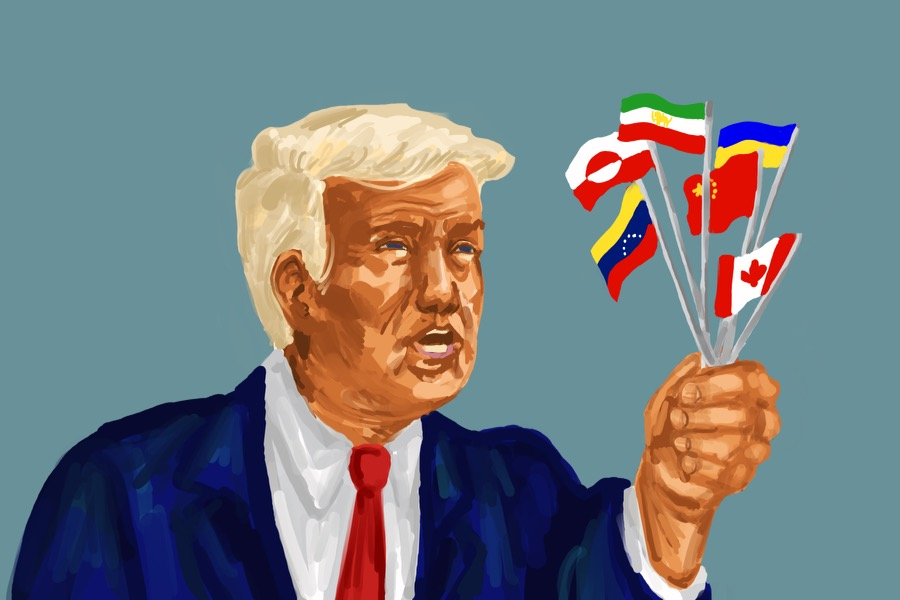
Throughout his campaign and presidency, one of the most commonly discussed policies of Trump were the heavy tariffs that he wanted to impose on nearly all foreign goods. According to Cernicek, these tariffs were extremely controversial and initially caused panic on Wall Street.
“When Trump first talked about tariffs, the market moved very significantly in a negative direction as it anticipated the economy slowing down,” Cernicek said. “However, that didn’t take place, so when earnings came out the market picked back up very quickly.”
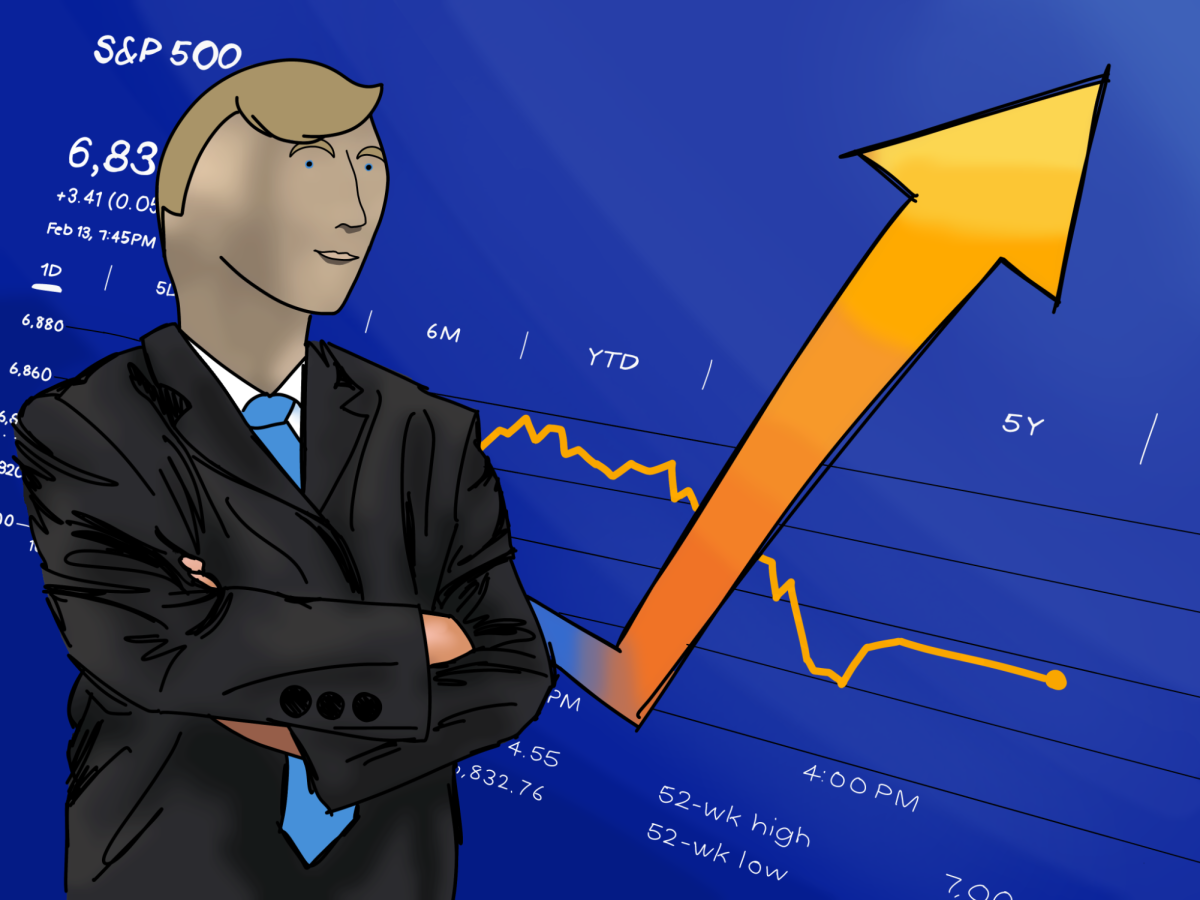
Last year, the market ended with a growth of 16%. Keaton Fabbro, sophomore and investor, said her personal portfolio grew nearly significantly throughout 2025.
“The S&P 500s that I’ve invested in are around 16% up in total,” Fabbro said. “What you’d usually expect is closer to 10%, so they’ve done well.”
While there are thousands of factors that affect Wall Street, some attribute its recent growth to the legislation carried out by President Trump in the last year. Nikki McIlwaine, senior vice president of wealth management at Raymond James, cites the economic policies practiced by Trump and the benefits that they offer corporations as being responsible for Wall Street’s growth.
“The current administration has an easing monetary policy,” McIlwaine said. “Which is better for lending, consumers and corporations, and is thus reflected in the stock market.”
Many of Trump’s tariffs have gone into effect, with some being enacted over the summer. According to Cernicek, even though it’s been half of a year, the full effects that these excise taxes will have on the U.S. economy are still unknown.
It’s yet to be seen if these tariffs have helped or hurt U.S. businesses,” Cernicek said. “Though the threat of tariffs have caused some companies to take action, that’s offered positive impacts for economic growth.”
Financial advisors such as Cernicek assure that elected officials usually have little sway over the affairs of Wall Street. However, he said Trump is one of the exceptions.
“The economy is rarely impacted by a changing administration,” Cernicek said. “However, Trump has definitely made a big difference, due to his extreme policies.”
On the other hand, Fabbro believes that the government has a far greater effect on the stock market’s changes. She stated that the way this administration is run provides many benefits for some of the larger corporations that dominate the S&P 500.
“This administration is more favorable to big corporations and already established businesses,” Fabbro said. “Pretty much everything goes back to the government.”